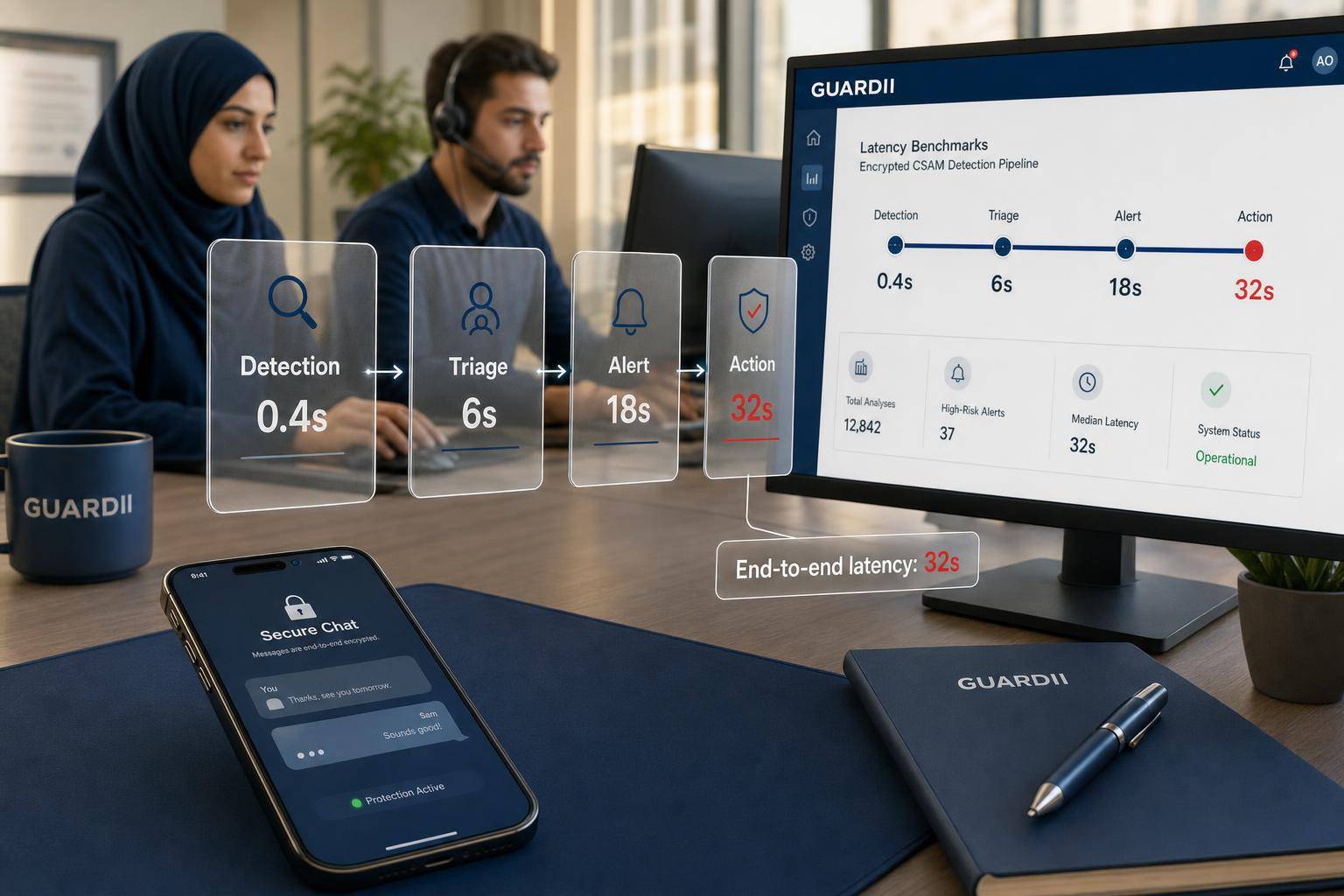
End-to-end detection-to-action latency—not model speed alone—determines safety in encrypted CSAM systems.

Comprehensive evidence logs preserve file integrity, track handoffs, redactions, and approvals across multi-agency investigations.

Argues age checks be used only where risk is high, favoring least-intrusive methods, privacy limits, and behavior-based protections for minors.

Biometric-bound age credentials verify age thresholds while protecting privacy; use at onboarding but pair with ongoing behavior monitoring.

Most serious harm starts in private chats; watch for secrecy and behavior shifts, document patterns, and use layered safeguards.

Standardize AI incident reports with clear thresholds, named owners, fixed fields, fast escalation, and tamper-evident evidence for audit readiness.

Practical strategies to detect CSAM in comments and DMs using hashes, AI models, behavior signals, and privacy-preserving workflows.

Examines AI-driven child-safety filtering: age-aware detection, behavioral DM scoring, audit trails, retention rules, and fast reviewer workflows.

How explainable, privacy-first AI flags risky student messages, aids fast human review, and prioritizes student support.

Use local federated models to spot grooming behavior over time, preserve privacy, and surface explainable alerts for human review.