
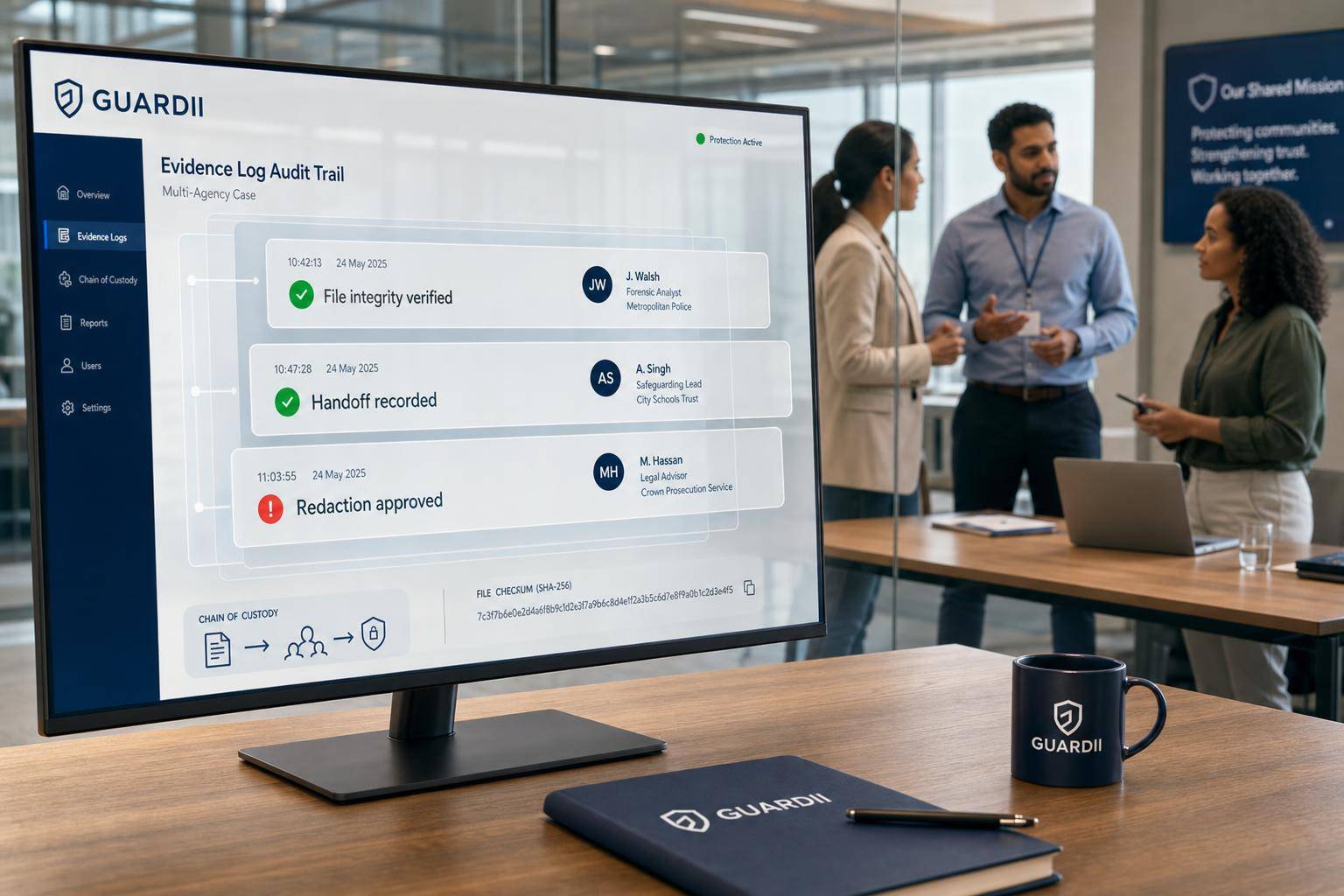
How Evidence Logs Support Multi-Agency Cases
If multiple teams touch the same case, the log is what keeps the case usable. I’d boil it down like this: a good evidence log shows who did what, when they did it, why they did it, and whether the file stayed unchanged from intake to review.
Here’s the short version:
- Every handoff needs a record: sender, receiver, case ID, time, file type, and hash check
- Every access event needs a trail: file views, approvals, exports, and case notes
- Redactions must be logged: what was removed, who removed it, why, and when the release copy was made
- Original files should stay untouched while shared copies move between teams
- One shared audit trail cuts delay, repeat work, and confusion during review
I also see a clear pattern in cross-team cases: the file itself often isn’t the weak point. The weak point is the transfer. If one team can’t show who received the material on 07/22/2026 at 2:15 PM, or whether the hash matched on receipt, the case can stall fast.
A usable log usually includes:
- SHA-256 hash to check file integrity
- Timestamps for each step
- Named users, not just job titles
- Action history for views, notes, approvals, and redactions
- Handoff records between agencies or teams
- Linked case notes that explain the reason behind each step
This matters most in child safety and online abuse cases , where AI detects grooming behavior to flag risks early,, where material may move between schools, platform teams, hotlines, police, and prosecutors. In that setting, even small gaps can create big review problems. A clear log gives each approved party the same record to work from.
Below, I’ll break down how that kind of logging supports handoffs, access control, redactions, and case review across multi-agency work.
How Evidence Logs Track Handoffs and Access Decisions
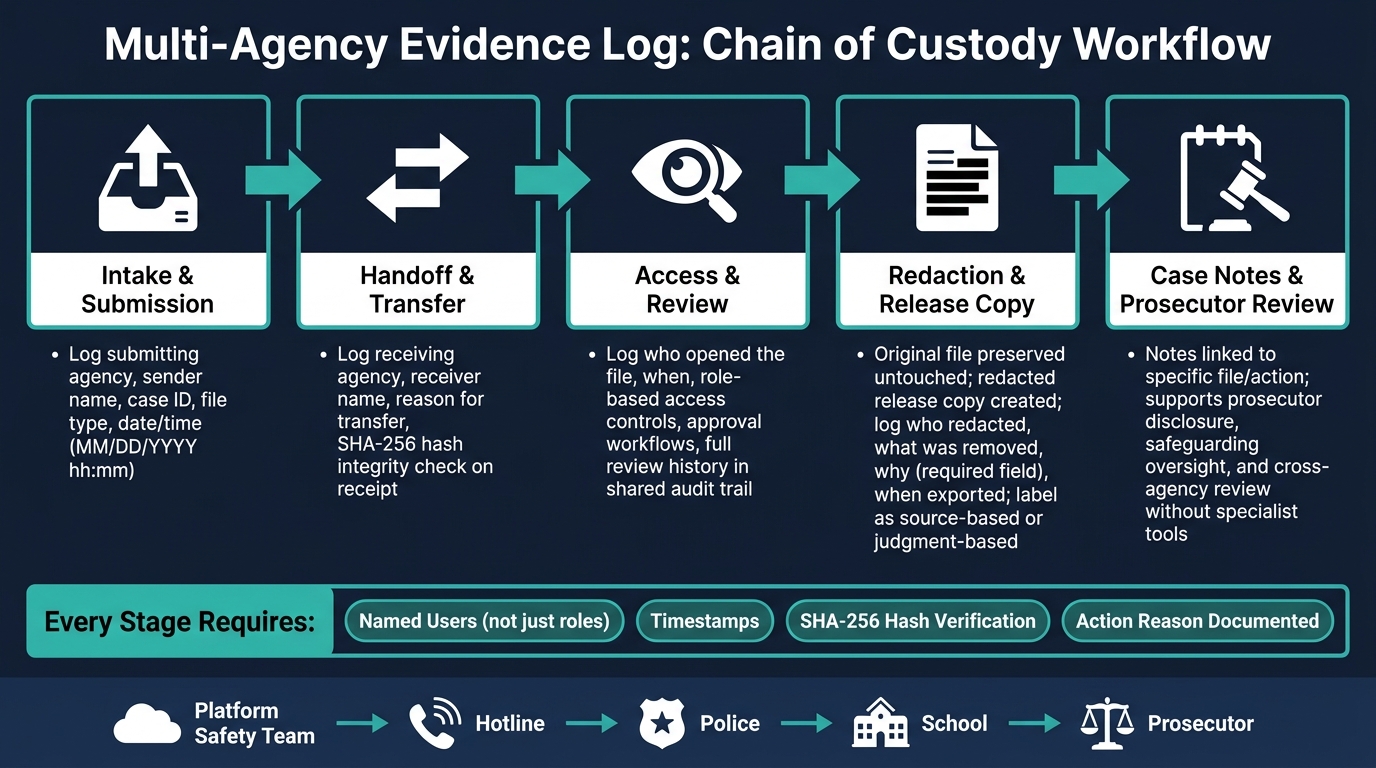
Evidence Log Chain of Custody: Multi-Agency Workflow
At each transfer, the log needs to show exactly what changed hands and who signed off on it. When evidence moves between police, schools, hotlines, and platform safety teams, every handoff needs a record that all agencies can rely on as the same source of truth.
What to Log at Each Handoff from Intake to Case Assignment
A handoff entry needs more than a timestamp. It should name the agency sending the evidence, the agency receiving it, and the case ID that ties the transfer to a specific investigation. It should also identify both people involved by name, not just by role.
| Handoff Field | What to Capture |
|---|---|
| Submitting Agency | Name of the agency or team sending the evidence |
| Receiving Agency | Name of the agency or team accepting it |
| Sender / Receiver | Name of both individuals involved |
| Case ID | Unique identifier linking the transfer to the active case |
| File Type | Type of evidence being transferred |
| Reason for Transfer | Why the evidence is moving to the next agency |
| Integrity Check on Receipt | Hash verification confirming the file arrived unchanged |
| Date and Time | MM/DD/YYYY, hh:mm a |
After the handoff is logged, access should stay limited until the next review or approval.
Approval Workflows and Role-Based Access Controls
Role-based access control sets clear limits on who can view, upload, share, or escalate evidence. Approval workflows show who approved each step. Put together, these controls reduce needless exposure while still allowing each agency to act on the evidence it needs.
What a Defensible Chain-of-Custody Entry Must Include
A defensible chain-of-custody entry should show:
- Who handled the evidence
- What action took place
- When it happened
- Whether the file stayed intact
- Who approved access
That way, every agency can check that the file stayed unchanged as it moved between systems.
Once the transfer trail is clear, the log should also track what reviewers do with the file next.
After transfers are recorded, the same audit trail should capture every file view, redaction, and case note.
sbb-itb-47c24b3
How Logs Cover File Views, Redactions, and Case Notes
File-View Logs and Review History
A file-view log should show who opened a file, when they opened it, and what happened next. If the same file is reviewed by police, a school safeguarding team, a hotline, or a platform safety unit, every access event should appear in the same audit trail. That way, one group doesn’t end up repeating work or missing the fact that someone else already reviewed it.
Good systems keep the full review history step by step, so a reviewer can trace who did what, and in what order [1].
Once that history is in place, the log also needs to show how shared copies were made without changing the original file.
Redactions, Release Copies, and Preservation of Originals
When material needs to be shared, the right move is to create a redacted release copy while keeping the original preserved and untouched. The release copy can then move across agencies, while the original evidence stays intact for later review.
Each redaction entry should record:
- who made the redaction
- what was removed
- why it was removed
- when the release copy was exported
The reason should be a required field, not just an optional note, so the record can still be reviewed later [2]. Each entry should also be labeled as source-based or judgment-based, which shows whether the redaction came directly from the file or from the investigator’s interpretation [2].
Once file versions are under control, case notes fill in the human side of the record: the judgment behind each step.
Case Notes That Document the Investigative Narrative
Logs show the action. Case notes show the reason. Each note should be linked to the exact file or action it explains, not left sitting nearby as an afterthought [2]. If a reviewer records a risk assessment or explains why a case was escalated to another agency, that note should sit right alongside the evidence it refers to.
That setup gives prosecutors, safeguarding officers, and cross-agency reviewers one clear view of the decisions made at each stage. It helps police, schools, hotlines, and platform teams share evidence without losing context or control.
Benefits of Evidence Logging for Child Protection and Online Safety Teams
Cutting Duplication, Delay, and Exposure of Sensitive Material
When access, redactions, and notes are logged in one place, teams don’t have to keep doing the same work over and over. A unified evidence log keeps evidence, screenshots, and access history in a shared record, which cuts duplicate review and limits extra handling of sensitive material.
It also makes the process easier to repeat across similar cases. Instead of rebuilding the workflow each time, teams can use the same logging steps again, helping agencies move through similar cases faster and with fewer repeat actions.
Supporting Prosecutor Review, Disclosure, and Safeguarding Oversight
A well-structured evidence log also makes case handoff much smoother. Prosecutors and safeguarding leads can follow the case timeline without needing specialist tools, which removes a lot of friction during review.
That matters even more when the system tags where each detail came from - whether it came straight from the evidence or from analyst judgment [2]. Reviewers can then see the difference at a glance. Structured reports and dashboards also help internal safeguarding teams rebuild the investigative timeline, while school administrators or prosecutors can review case history without deep technical knowledge [1][2].
Private-Message Abuse Cases and the Role of Guardii
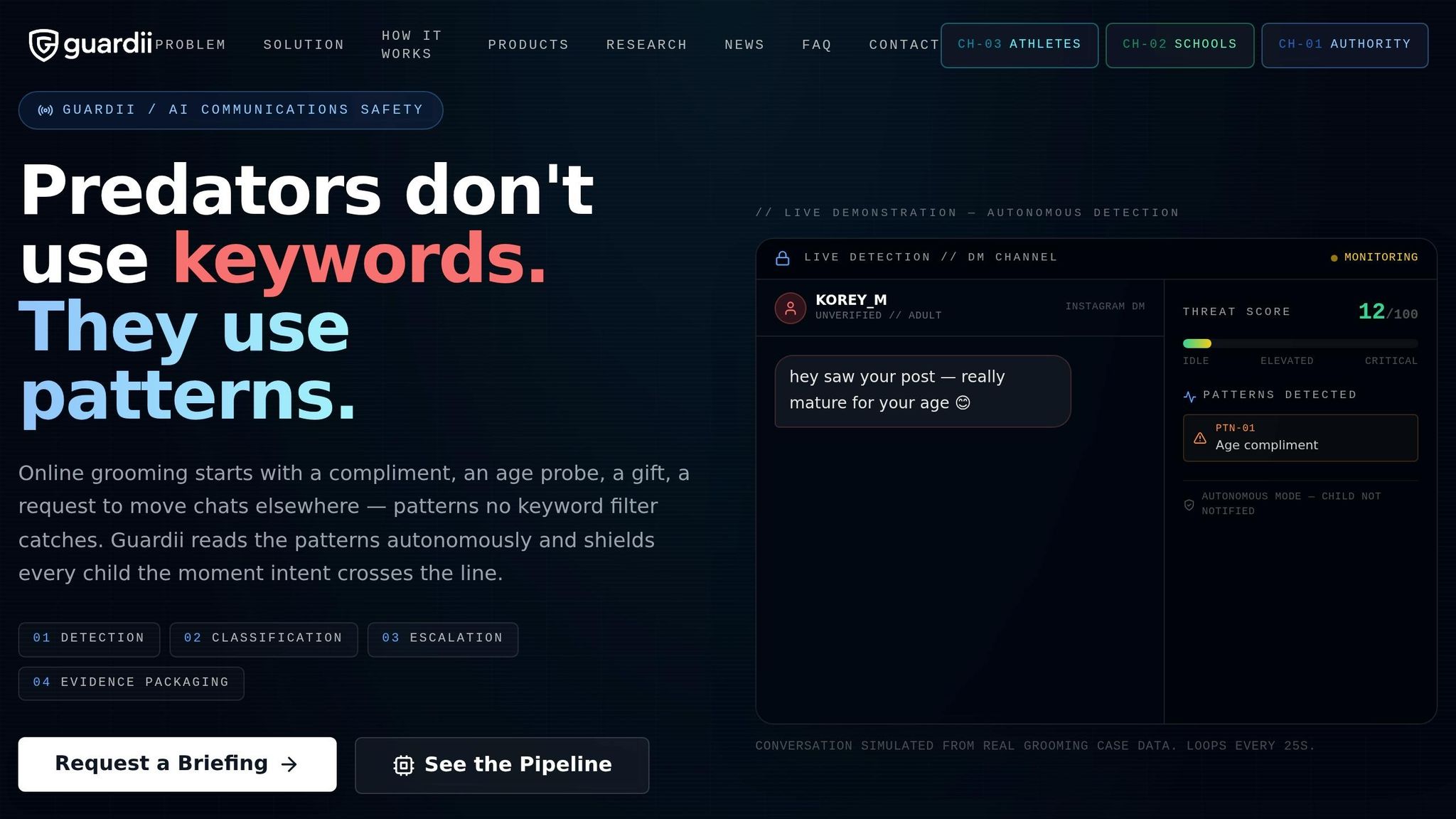
Private-message abuse cases often create the biggest evidence-sharing gap. The reason is simple: the material that matters most is usually hidden from public view.
In those cases, Guardii logs detections and analyst actions so evidence can move cleanly from platform safety teams to law enforcement, schools, or clubs.
Conclusion: What Strong Evidence Logging Makes Possible
Taken together, these logs turn separate agency actions into one shared record. When every action is logged in sequence, that record stays usable across agencies. And that makes multi-agency cases easier to review and defend.
That shared record also has to show that the file stayed intact. Hash-verified packages preserve file integrity across the chain of custody, so each file can be checked at every handoff. In private-message abuse cases, Guardii compiles those packages with a full audit trail, keeping detections prosecution-ready as evidence moves between platform safety teams, law enforcement, schools, and clubs.
Multi-agency logging gives child protection teams the infrastructure to coordinate at scale. Strong evidence logging turns scattered actions into a defensible shared record. That is what lets police, schools, hotlines, and platform teams act from the same record.
FAQs
What makes an evidence log legally defensible?
An evidence log is legally defensible when it keeps a secure, tamper-evident chain of custody from start to finish.
It also needs a clear audit trail that shows how the information was ingested, processed, and packaged. Just as important, it should preserve thread continuity and context so the sequence of events stays reliable, verifiable, and ready for designated authorities if escalation is needed.
Why are hashes important in multi-agency evidence sharing?
Hashes help protect the integrity of digital evidence in multi-agency cases. Each hash acts like a digital fingerprint for a file, which lets schools, platforms, and law enforcement check that nothing changed as the file moved from one hand to another.
That tamper-evident check helps support a reliable chain of custody and preserve the file’s evidentiary value in legal proceedings.
How should teams handle redacted copies without altering originals?
Teams should use systems that create tamper-evident packages with a complete, immutable audit trail. That matters for a simple reason: if someone later asks, “Was this file changed?”, the system should make the answer clear.
If redaction is needed, the original files should stay unchanged in the system to preserve chain of custody. Instead of editing the source, the platform should create separate redacted copies for sharing or review.
That way, the main evidence stays prosecution-ready and verifiable, while the redacted version can be used where privacy or limited access is required.