
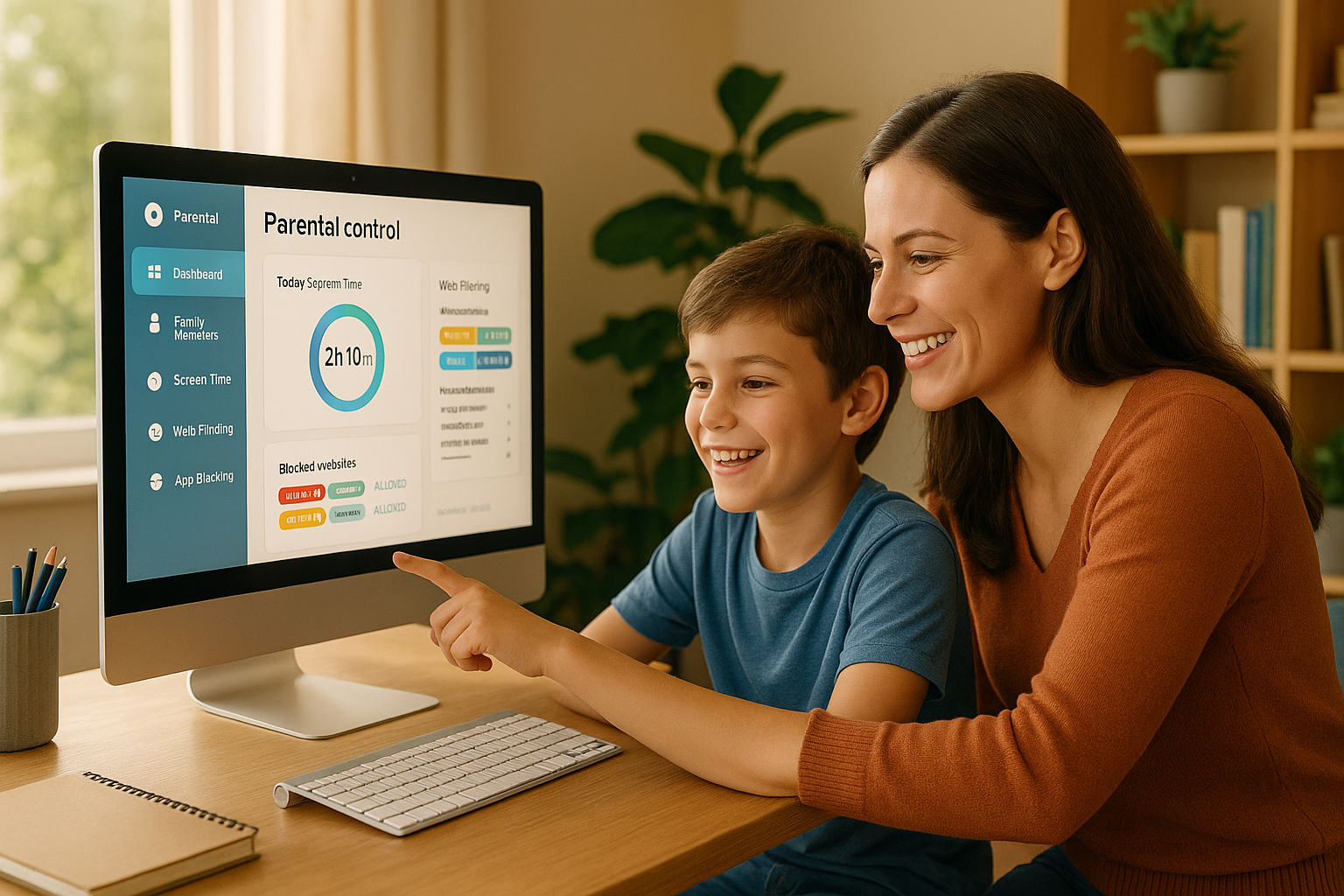
How Customizable Filters Protect Kids Online
Customizable filters are tools that help protect kids online by allowing parents to tailor internet safety settings to their child’s age, maturity, and needs. With the rise in online grooming (up 400% since 2020) and sextortion cases (up 250%), these filters have become essential for reducing exposure to harmful content.
Key features include:
- AI-Powered Content Analysis: Filters assess the context of content, reducing false positives.
- Real-Time Monitoring: Blocks harmful material instantly, even in private messages.
- Parental Controls: Manage website access, screen time, and app usage.
- Age-Specific Settings: Adjust restrictions as kids grow.
- Privacy-Conscious Design: Protect children without invading their privacy.
Modern tools like Guardii focus on detecting risks like predatory behavior in messaging apps, offering alerts and evidence preservation for parents. These systems combine technology with open communication to create a safer online experience for families.
How to Put Parental Controls on YouTube: 2025's Ultimate Guide To Enable Safety Mode
How Customizable Filters Work
Understanding how customizable filters function can help parents make informed decisions about online safeguards for their children. These systems combine several protective layers to create an effective barrier against harmful content.
Key Mechanisms of Filtering Systems
Customizable filters use four main strategies to provide online protection for kids:
- Keyword Blocking: This goes beyond basic profanity filters, targeting terms linked to violence, drugs, or other topics parents might find inappropriate.
- AI-Based Content Analysis: Unlike traditional filters, AI-driven systems analyze context and intent. This allows them to differentiate between educational material on sensitive topics and genuinely harmful content.
- URL Filtering: This feature blocks access to specific websites or entire categories of sites. Parents can restrict broad categories - like violence, drugs, or hate speech - or focus on narrower subcategories. These filters can also enforce SafeSearch settings, even in private browsing modes, to prevent common workarounds[5].
- App Restrictions: Parents can manage access to risky mobile apps and social media platforms.
These tools allow families to customize filters to match their specific needs.
Static vs. Customizable Filters
Think of the difference between static and customizable filters as the contrast between a simple locked door and a smart security system. Static filters rely on pre-set rules and blocklists determined by the software provider. While straightforward, they offer limited flexibility and may block harmless content while failing to catch more nuanced threats[4].
Customizable filters, on the other hand, give parents the ability to tailor settings. They can block or allow specific content and adjust sensitivity levels based on their child’s unique requirements[2][4]. Advanced options even allow for personalized blocklists and fine-tuning of filtering categories, making them more adaptable to family priorities and emerging online risks.
One of the key advantages of customizable filters is their context awareness. For example, a static filter might block an educational article on drug prevention due to certain keywords. In contrast, an AI-powered customizable filter can recognize the article’s educational purpose and grant access.
Adapting Filters to Family Needs
Customizable filters are especially effective because they can align with a family’s values and adapt to a child’s developmental stage. Parents can modify filtering categories to address specific concerns or cultural priorities.
Age-Appropriate Customization is a critical feature. Advanced filtering systems allow parents to create profiles tailored to different age groups, offering more restrictive settings for younger children and broader access for older ones[2][6]. For instance, older kids might need access to resources for school projects, while younger ones benefit from stricter controls.
Platforms like Guardii take customization further by using AI to monitor direct messaging platforms. This ensures harmful behavior, like predatory messaging, is detected and blocked - without parents having to invade their child’s privacy. It strikes a balance between protection and trust.
"Kids are tech-savvy, but not threat-savvy. They need guidance, not just gadgets." - Susan McLean, Cyber Safety Expert[1]
As children grow and develop better digital judgment, parents should regularly adjust filtering rules. Periodic reviews allow for loosening restrictions in line with a child’s increasing digital literacy and responsibility. This evolving approach ensures that protection remains suitable for their needs.
Real-time content scanning is another powerful feature of these systems. By analyzing web pages, images, and messages as they are accessed, these filters can instantly block emerging threats and unsafe user-generated content[2][4]. This ensures that children remain safe in an ever-changing online environment.
Top Features of Customizable Filtering Solutions
Modern filtering tools have gone far beyond basic website blockers. The best systems today combine artificial intelligence, real-time monitoring, and customization options to create adaptable protections tailored to each family’s needs. Here’s a closer look at how these features address the evolving challenges of online safety.
Real-Time Content Scanning and Blocking
One standout feature of advanced filtering systems is their ability to analyze and block harmful content the moment it appears. Unlike older tools that relied on static blocklists, modern systems use real-time AI monitoring to scan content instantly as it’s accessed.
For example, these systems evaluate websites and social media platforms in real time, detecting harmful material that hasn’t yet been cataloged. This approach ensures that new threats are caught quickly. Context-aware algorithms also play a key role, interpreting the meaning of content rather than just flagging keywords. So, while traditional filters might block an educational article about drug prevention because it contains certain terms, AI-powered systems recognize the context and allow access. This reduces unnecessary blocks while still catching emerging risks.
Parents benefit from immediate updates through alerts for restricted searches or blocked attempts. These updates appear instantly in parent portals, which is particularly important given the rise in online grooming cases, many of which begin in private messages[1].
Parental Control and Customization
Modern filtering solutions empower parents with tools to tailor protections to their family’s needs. These systems provide a variety of options to manage content access and screen time, making it easier for families to create a safer online environment.
At the core of parental control is manual blocking and allowing. Parents can create custom blocklists for specific websites or categories while maintaining allowlists for trusted resources. Advanced systems even allow parents to block entire categories or subcategories and offer warnings before blocking content, helping older children develop better judgment online[5].
Screen time management is another key feature. Parents can set daily or weekly usage limits, schedule device access during homework or bedtime, and monitor app usage. These tools help establish healthy boundaries without requiring constant oversight.
Since pricing and features vary across providers, it’s worth comparing options to find the best fit for your family.
Age-Appropriate and Context-Aware Protection
One of the more advanced capabilities of modern systems is their ability to adjust protections based on a child’s age and maturity. Customizable profiles let parents create different settings for each child, offering stricter controls for younger kids and more flexible access for teens.
These systems go beyond basic age brackets by analyzing context and intent. For instance, they can distinguish between harmless interactions and genuine threats, which is critical as cases of sextortion - especially targeting teenage boys - have surged by over 250% since 2020[1].
Parents can also adjust sensitivity levels as children grow. For example, a 10-year-old might be restricted from all social media, while a teenager could have supervised access to educational platforms. Even as access increases, these systems monitor for serious risks like cyberbullying or predatory behavior. Some solutions scan for over 29 harmful themes in messages and images, notifying parents only when genuine threats arise[3]. This targeted approach minimizes unnecessary alerts while ensuring critical risks are addressed.
Privacy and Transparency Features
Protecting children online doesn’t have to come at the cost of their privacy. Modern filtering tools strike a balance by offering privacy-respecting features and ensuring transparency in how they operate.
Transparency is key. These systems provide clear notifications about what’s being monitored and why, along with age-appropriate explanations of filtering decisions. Children can even request changes to restrictions, fostering digital literacy and open communication.
Guardii is a great example of this balance. It focuses specifically on detecting and blocking predatory behavior in direct messaging platforms without broadly monitoring all online activity. This targeted approach helps maintain trust between parents and children while addressing serious risks.
Another critical feature is evidence preservation. Suspicious content can be securely saved for potential law enforcement use, and parents are provided with simple tools to report serious threats. This is particularly important since only 10-20% of online predation cases are reported to authorities due to underreporting[1].
Finally, regular activity reports and clear communication about filtering decisions encourage open discussions about online safety. These systems don’t operate in secrecy - they aim to help families build a foundation for safe and responsible internet use. By promoting conversations about digital behavior, they support lifelong habits of safe online engagement.
Steps to Set Up and Manage Customizable Filters
Getting started with parental control filters is straightforward, thanks to user-friendly wizards and clear dashboards. The key is to find a system that fits your family's needs and follow a logical approach to set it up.
Installing a Filtering System
Start by assessing your family's specific needs. Consider factors like the number of devices, the ages of your children, and the type of content you want to restrict. This evaluation will guide you in choosing a filtering solution that includes features like web filtering, screen time management, app blocking, and compatibility with your devices.
Many systems offer free trials, so you can test them before committing. Installation usually involves downloading a parental control app or software onto each device, creating a parent account, and following step-by-step instructions to configure the basics. Some systems may require hardware to manage all devices on your network. Fortunately, most platforms feature intuitive interfaces and responsive customer support to simplify the process.
Once installed, the next step is to customize the filtering rules for each child.
Creating and Adjusting Filtering Rules
With the system in place, you can set up filtering rules tailored to each child’s age and needs. For instance, younger children may require stricter controls, while teenagers might benefit from monitored but more flexible access.
Most platforms allow you to create individual profiles for each child. Features like SafeSearch can often be enabled with a single click, filtering out explicit or inappropriate content from search engine results. Many systems also include tools for managing screen time, letting you set daily or weekly usage limits, schedule device-free times, and monitor usage patterns.
For example, you could enable SafeSearch for all children, block social media for younger users, and set screen time limits tailored to their routines. Many solutions offer pre-set templates or recommended settings, which you can tweak as your children grow and their needs change. The goal is to strike a balance - providing protection while gradually easing restrictions as your children demonstrate responsible online behavior.
These custom rules lay the foundation for ongoing management and updates.
Maintaining and Updating Filters
As your children grow and online risks evolve, it’s crucial to regularly review and adjust your filtering settings. Many systems provide detailed activity reports and alerts, helping you spot trends in blocked content and decide if current restrictions are still appropriate. Experts suggest reviewing these reports monthly to stay on top of any changes.
Setting reminders for these reviews can help you keep the filters up-to-date. Enabling automatic updates ensures the software adapts to new threats without requiring constant manual adjustments.
Some solutions, like Guardii, use AI to handle these updates automatically. According to Guardii:
"Our AI continuously monitors for predatory behavior and harmful content" and "adjusts protection as children mature and develop digital independence." [1]
While technology plays a major role, open communication with your children is just as important. Talk to them about online safety and involve them in setting rules. This approach builds trust and encourages them to act responsibly online. Be flexible with your restrictions - tightening them during exams or loosening them as your children show they can handle more freedom responsibly. Combining technology with open dialogue ensures a safer and more balanced digital experience for your family.
sbb-itb-47c24b3
Benefits and Challenges of Customizable Filters
Customizable filters provide a robust way to safeguard children online, but they come with their own set of pros and cons. Deciding on the right solution means carefully considering your family’s unique needs and how comfortable you are with the technical aspects.
Balancing the Benefits and Challenges
One of the standout advantages of customizable filters is their ability to adapt to your child’s needs as they grow. Unlike generic, one-size-fits-all tools, these systems let you fine-tune settings based on your child’s age, maturity, and your family’s values.
Another major perk is real-time content scanning. This feature analyzes websites as they load, blocking harmful content instantly. Advanced systems also provide immediate alerts and detailed reports for parents, making it easy to monitor and respond to any flagged activity[5].
That said, these filters aren’t perfect. Overblocking is a common issue - sometimes, legitimate educational or entertainment content gets mistakenly flagged. For example, a math tutoring site might be blocked for using the word "problems", or an article on online safety could be restricted due to mentions of sensitive topics. This can lead to frustration and even erode trust in the system.
Another challenge is the ongoing maintenance required. Customizable filters aren’t a "set-it-and-forget-it" solution. Parents need to regularly review activity logs, update settings as their children grow, and stay informed about emerging online threats. For families juggling multiple children or busy schedules, this can quickly feel overwhelming. Below is a quick comparison of the benefits and challenges:
| Benefits | Challenges |
|---|---|
| Tailored Protection: Adjust settings based on age and maturity | Overblocking: Legitimate content may be unnecessarily restricted |
| Real-Time Filtering: Instantly identifies and blocks harmful content | Ongoing Maintenance: Requires regular updates and monitoring |
| Detailed Reporting: Offers alerts and comprehensive activity logs | Technical Complexity: Some features may be difficult to manage without tech know-how |
| Granular Control: Allows specific content categories to be blocked, warned, or allowed | Circumvention Risk: Tech-savvy kids may find ways to bypass the filters |
| Cross-Platform Support: Works across multiple devices and operating systems | Cost: Advanced features often come with subscription fees |
Privacy and transparency also play a big role in how effective these filters are. Many modern tools offer clear reporting on what gets blocked and even allow children to request access to restricted sites. This not only builds trust between parents and kids but also encourages open conversations about online safety[2][3].
Cost is another consideration. While free options exist, premium versions typically offer better accuracy and fewer false positives. AI-powered tools like Guardii are tackling traditional limitations by using smarter filtering methods that understand context, rather than just flagging keywords.
"Kids are tech-savvy, but not threat-savvy. They need guidance, not just gadgets." – Susan McLean, Cyber Safety Expert, Cyber Safety Solutions[1]
These smarter systems help reduce overblocking while still providing strong protection against real threats. They also adjust monitoring levels as kids grow, balancing safety with respect for their privacy and independence.
Ultimately, the success of any filtering solution depends on how well it aligns with your family’s needs and communication style. Technology works best when it supports - not replaces - ongoing conversations about digital responsibility. Customizable filters are just one piece of a larger strategy to create a safe and healthy online environment for children.
The Role of AI-Driven Solutions in Modern Online Protection
AI-driven solutions are reshaping online child safety by introducing smarter protections that can identify and respond to emerging threats in real time.
How AI Enhances Filtering Systems
AI has revolutionized online protection by going beyond simple keyword-based filtering. Using tools like natural language processing, machine learning, and sentiment analysis, these systems can detect coded language and evolving harmful patterns. This approach has been shown to reduce children's exposure to risks by as much as 80% [7][4].
One standout feature is context-aware detection. For example, AI can differentiate between a discussion about health education and inappropriate sexual content or distinguish playful teasing among friends from actual bullying. This precision minimizes false alarms and prevents unnecessary content blocks.
AI also excels in areas where traditional filters fall short, such as analyzing social media feeds, direct messaging apps, and even encrypted communications. Importantly, this is done without compromising privacy. The technology scans content in real time without storing or reading every message. Guardii, for instance, uses AI specifically to safeguard children on direct messaging platforms.
The Guardii Advantage

Guardii takes these AI advancements and applies them to real-world digital safety challenges, focusing on protecting children in private messaging environments. With 80% of grooming cases starting in direct messages, this targeted approach addresses one of the most vulnerable areas of online interaction [1].
What makes Guardii stand out is its privacy-first design. Instead of storing or reading all messages, its AI analyzes behavioral patterns and conversation dynamics. Suspicious content is immediately removed from the child’s view and preserved as evidence for parents or law enforcement. This process is instantaneous, often stopping harmful content before it reaches the child.
Guardii also provides actionable alerts that help parents respond effectively. Instead of flooding families with false positives, its AI ensures alerts highlight genuine concerns. Parents receive detailed insights into the threat level, suggested actions, and resources to manage the situation.
"The research clearly shows that preventative measures are critical. By the time law enforcement gets involved, the damage has often already been done." – Guardii's 2024 Child Safety Report [1]
Guardii’s age-appropriate safeguards adjust monitoring as children grow, offering the right balance between protection and independence. A 10-year-old and a 16-year-old require different levels of oversight, and the system adapts accordingly.
The setup process is designed with families in mind. In just three simple steps, parents can connect Guardii to major messaging platforms without needing technical expertise. The parent dashboard provides essential safety information while promoting trust and open communication between parents and children. This approach encourages conversations about online safety instead of secretive monitoring.
With online grooming cases rising by over 400% since 2020 and sextortion cases increasing by more than 250% in the same period [1], AI-driven tools like Guardii are becoming indispensable for families navigating today’s digital landscape.
Conclusion: Protecting Kids Online with Customizable Filters
The digital world has reshaped how children connect and communicate, but it has also introduced serious safety concerns. Alarming statistics reveal a sharp rise in online grooming cases - up over 400% since 2020 - and sextortion incidents, which have climbed by more than 250% in the same timeframe[1]. These figures highlight the urgent need for effective tools to safeguard kids online.
Customizable filters offer a flexible solution that static systems simply can't match. By tailoring settings to a child’s age, maturity, and online behavior, parents can create a protective environment that doesn’t compromise age-appropriate freedom.
Advances in AI technology have taken filtering systems to the next level. Instead of relying solely on keyword blocking, modern tools can assess context, decode hidden language, and recognize patterns of predatory behavior in real time. This is especially important when you consider that 80% of grooming cases start in private direct messages[1].
Guardii is a great example of how these advancements are being put to use. Its AI-driven platform zeroes in on the riskiest areas of online interaction, offering privacy-conscious monitoring that protects kids while fostering trust within families. By instantly removing harmful content and preserving evidence when needed, Guardii proves that smarter filtering systems can both protect and empower families.
FAQs
How do customizable filters keep kids safe online while respecting their privacy?
Customizable filters, such as those provided by Guardii, play a crucial role in keeping children safe online. They work by detecting and blocking harmful content in digital interactions, focusing specifically on identifying risky behaviors or messages without prying into a child’s private conversations.
With the help of advanced AI technology, these filters strike a balance between safety and privacy. This approach helps build trust between parents and children while ensuring their online experiences remain secure.
What makes customizable filters more effective than static filters for keeping kids safe online?
Customizable filters stand out because they adjust to your specific needs and the ever-changing online landscape. Unlike static filters, which rely on fixed rules and often fall short when faced with new threats or subtle shifts in language, customizable filters let parents fine-tune settings. They can adapt based on a child’s age, interests, and emerging online risks, creating a more flexible and personalized layer of protection.
Guardii takes this a step further by leveraging AI to monitor, detect, and block harmful content and predatory behavior on direct messaging platforms. This approach helps keep children safe while respecting their privacy and maintaining trust.
How can parents keep customizable filters effective as their children grow and online risks change?
To keep filters effective as children grow, parents should select tools that can adjust to both their child’s development and the ever-changing landscape of online risks. AI-powered tools, such as Guardii, provide real-time monitoring to detect and block harmful content and predatory behavior, offering ongoing protection.
These filters operate 24/7, shielding children during their online activities while respecting their privacy. By periodically reviewing and fine-tuning the filter settings, parents can ensure their child’s digital safety evolves alongside their growing needs and changing online habits.