
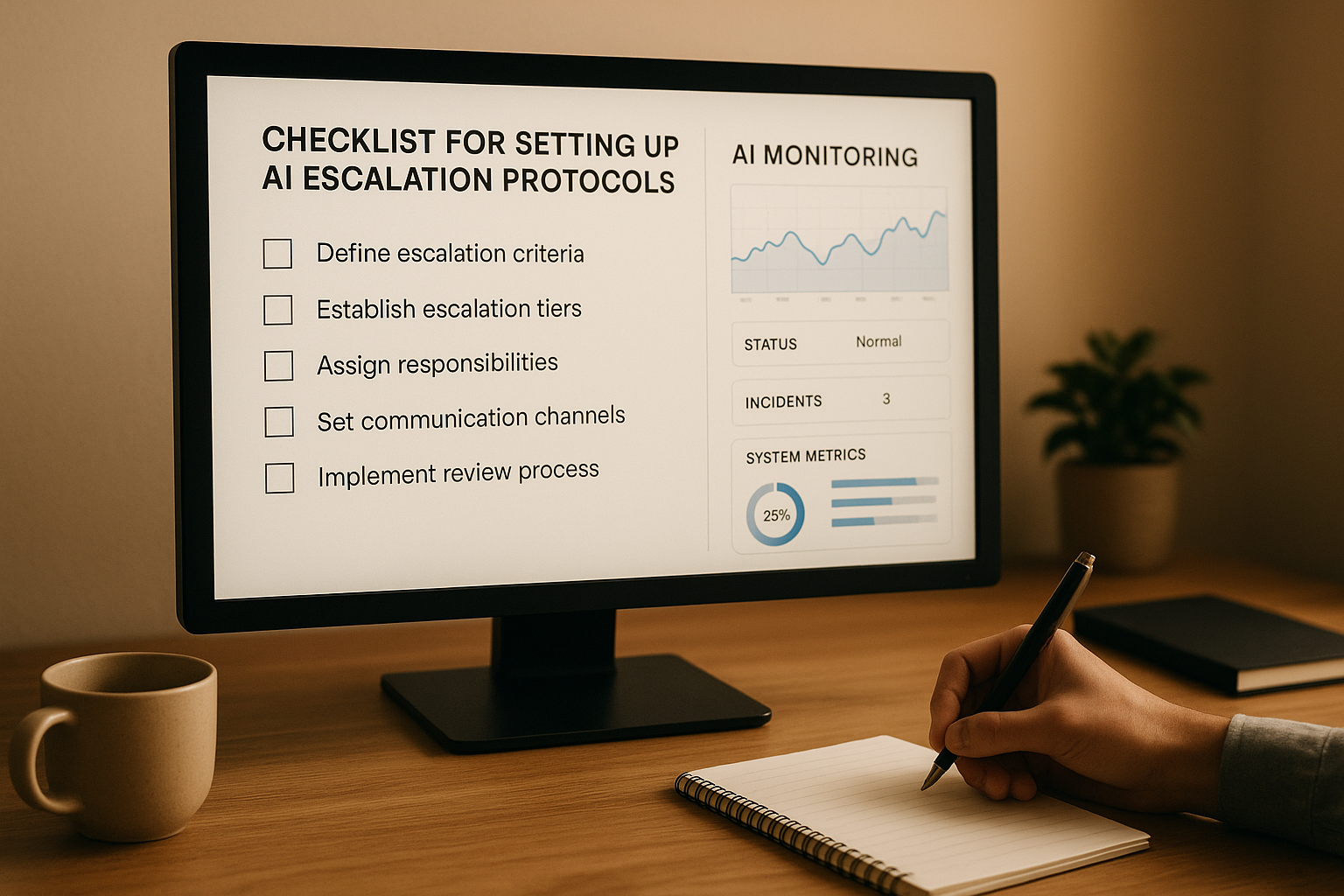
Checklist for Setting Up AI Escalation Protocols
AI escalation protocols help protect children online by identifying and responding to potential threats, such as grooming or sextortion attempts, in direct messages. These systems go beyond traditional parental controls by analyzing interactions, blocking harmful content, flagging suspicious behavior, and alerting parents or guardians. With online risks increasing - like a 400% rise in grooming since 2020 - these tools are critical for child safety.
Here’s a quick breakdown of how to set up and manage AI escalation protocols effectively:
- Choose the Right AI System: Look for platforms like Guardii that monitor messaging environments and use contextual analysis to detect threats.
- Set Alerts and Escalation Levels: Configure alerts for low, medium, and high-risk scenarios to avoid notification overload.
- Use Parent Dashboards: Monitor activity, review flagged content, and adjust settings via an intuitive dashboard.
- Enable Evidence Collection: Securely store flagged content for potential law enforcement use while respecting privacy laws like COPPA.
- Tailor Protection by Age: Adjust settings as your child grows, ensuring appropriate oversight for their maturity level.
- Plan for High-Risk Situations: Use automatic blocking, real-time notifications, and a tiered escalation system for quick responses.
- Review and Update Regularly: Conduct monthly system checks, gather family feedback, and update AI models to address new threats.
Requirements for Setting Up AI Escalation Protocols
Here’s what you need to have in place to effectively set up AI escalation protocols in your home:
Technical Requirements
First things first, you’ll need a reliable high-speed internet connection. AI monitoring systems depend on uninterrupted connectivity to analyze messages and online activity in real time. Your internet should be stable, with consistent speeds, especially during times when your kids are most active online.
Next, make sure you’re using compatible devices. Most AI escalation systems work across popular platforms like Windows, macOS, iOS, and Android. Check that your devices meet the necessary hardware and software requirements, and always keep operating systems updated with the latest security patches.
Secure user accounts are also a must. Set up child-specific accounts with limited permissions, and enable two-factor authentication for added security. To protect all connected devices, consider implementing router-level filtering.
Finally, look for AI systems with parent dashboards. These dashboards should provide clear, actionable insights into your child’s online activity without being overly invasive.
Once the technical setup is complete, it’s time to focus on your role as a parent in managing these protocols.
Parent Roles and Duties
After the technical setup, parents play a key role in customizing and maintaining the system. Start by ensuring compliance with legal and privacy standards, and tailor the system to your child’s age and maturity level. This means setting up appropriate content filters, defining escalation thresholds, and determining what behaviors should trigger alerts.
Active monitoring is essential. Regularly review activity logs, respond quickly to alerts, and take a closer look at flagged content when necessary.
There’s also an educational component. Talk to your kids about the importance of online safety and the purpose of monitoring. Be clear about what triggers alerts, and teach them how to protect their personal information online. Encourage open communication so they feel comfortable discussing any concerning interactions with you.
Finally, be prepared for emergency situations. Know how to use reporting tools to notify authorities if needed, understand how to securely save evidence, and have a plan of action for addressing serious threats or risks.
Once these duties are established, you’ll need to ensure the system aligns with legal and privacy standards.
Legal and Privacy Compliance
It’s crucial to make sure your AI system complies with U.S. child protection and privacy laws. Look for platforms that meet COPPA requirements (Children’s Online Privacy Protection Act), which regulate how children’s data is collected and handled. Choose systems that clearly state their compliance and provide transparent data policies.
Privacy protection is another key consideration. The goal is effective monitoring without overstepping boundaries. Opt for platforms that use smart filtering to flag only genuinely concerning content. As Guardii puts it:
"We believe effective protection doesn't mean invading privacy. Guardii is designed to balance security with respect for your child's development and your parent-child relationship."
– Guardii [1]
Additionally, the system should offer evidence collection and reporting tools that meet legal standards. These tools should securely store flagged content for law enforcement if necessary, while also giving you easy options to report threats. Look for platforms that are transparent about data collection and provide clear ways to delete stored information when it’s no longer needed.
Transparency is key - not just from the system itself, but also in your communication with your children. Make sure they understand the purpose behind monitoring and how it’s meant to protect them. Verify that the platform you choose undergoes regular safety audits and adheres to current U.S. regulations. Systems designed with children’s online wellbeing in mind can strike the right balance between safety and respecting their growing independence.
Step-by-Step Setup Checklist for AI Escalation Protocols
Now that you’re familiar with the key requirements, it’s time to set up your AI escalation protocols. This guide walks you through creating a safety framework tailored to your family’s needs.
Choosing the Right AI System
Start by selecting an AI platform that can monitor direct messages - where the majority of grooming cases (8 out of 10) take place [1]. Look for systems that use contextual analysis to identify threats, rather than relying solely on keyword detection. This ensures the platform can differentiate between actual risks and harmless conversations.
One example is Guardii, a platform specifically designed to monitor messaging environments where kids are most at risk. Unlike general parental control tools, Guardii focuses on detecting predatory behavior while respecting privacy. It also offers automatic blocking, which removes harmful content from your child’s view immediately while saving it for review.
Make sure the system you choose is compatible with popular messaging platforms and is easy to set up. A guided installation process and minimal technical requirements are key for a smooth experience.
Setting Up Alerts and Escalation Levels
Once your AI system is in place, configure its alert settings to reflect the different levels of online threats. A well-designed alert system helps you stay informed without becoming overwhelmed by notifications.
- Low-risk alerts: These might involve inappropriate language or minor policy violations. They can be logged for later review.
- Medium-risk alerts: Persistent contact from unknown users or requests for personal information fall into this category. These should trigger notifications within a reasonable timeframe.
- High-risk alerts: Explicit predatory behavior, grooming language, or sextortion attempts require immediate action and should generate instant alerts.
Research from Common Sense Media shows that families using advanced AI parental control systems experience 89% fewer concerning interactions compared to those without supervision [2].
Your system should provide detailed context for each alert, explaining why the content was flagged and offering actionable next steps. Smart filtering is crucial to avoid flagging normal conversations unnecessarily while maintaining privacy.
Creating Parent Dashboards
A well-designed parent dashboard offers visibility into your child’s online activity without being invasive. Key metrics, such as the number of threats blocked, safety scores, and monitored platforms, should be easy to access.
For example, Guardii’s Parent Dashboard Preview clearly displays stats like “7 Threats Blocked,” “100% Safety Score,” and “2 Platforms Monitored” [1]. This layout gives parents a quick overview of their child’s safety status and the system’s activity.
The dashboard should include intuitive controls for adjusting settings, reviewing flagged content, and managing user profiles. Real-time logs of security-related events and alert histories help track patterns and ensure quick responses. A user-friendly interface that works across devices is essential for consistent protection.
Turning On Evidence Collection
To strengthen your system’s readiness for legal situations, enable automated evidence collection for high-risk incidents. Ensure the data is encrypted, stored securely, and exportable in formats that meet legal standards, including timestamps and source details.
Your system should comply with COPPA regulations while focusing on collecting evidence for genuine threats, not routine interactions. This balance ensures legal compliance without overstepping privacy boundaries.
Exportable evidence is particularly important if law enforcement becomes involved. The system should generate detailed reports with proper documentation, including chain-of-custody records. Notifications should inform you when evidence is collected and what data is stored, fostering transparency and trust.
Setting Protection Levels by Age
Adjust your AI system’s settings based on your child’s age and maturity. This ensures the level of protection evolves as your child grows, balancing safety and independence.
- Ages 6–10: Enable maximum monitoring, block unknown contacts, and flag any sharing of personal information.
- Ages 11–13: Focus on detecting grooming language, allow some approved contacts, and block arrangements for offline meetings.
- Ages 14–18: Provide balanced oversight, focusing on high-risk behaviors like sextortion or contact from significantly older individuals.
You may also need to tailor settings based on your child’s online experience and judgment. Regularly reassess these configurations - monthly check-ins can help ensure the system adapts to your child’s development while maintaining trust and safety.
Quick Response Plans for High-Risk Situations
When facing high-risk threats, quick and coordinated action is essential. A well-thought-out response plan not only protects your child immediately but also ensures the right steps are taken for follow-up. The goal is to combine automated defenses with a smart escalation process that involves the right people at the right time.
Automatic Blocking and Alerts
An AI system should serve as the first line of defense, instantly blocking harmful content before your child even has a chance to see it. For instance, Guardii automatically blocks harmful material while also securing evidence for review.
Real-time notifications are just as important. When the system detects genuinely concerning content, you should receive immediate alerts through your phone, email, or a parent dashboard. These alerts provide critical details, such as the type of threat, the platform involved, and clear recommendations for what to do next. For severe risks, push notifications should arrive within seconds, while less urgent situations can be summarized in daily or weekly updates to prevent notification overload. These automated responses lay the groundwork for a tiered escalation process, described below.
3-Level Escalation System
Once automated alerts are in place, a tiered escalation system ensures that the response aligns with the severity of the threat.
- Level 1: Low-to-moderate risks are managed through automatic blocking and logging.
- Level 2: Moderate-to-high risks, such as repeated predatory behavior or attempts to move conversations to unmonitored platforms, trigger urgent notifications.
- Level 3: The most serious threats - those that may require law enforcement - generate immediate alerts and preserve detailed evidence, including tools for contacting authorities.
This approach ensures that each situation gets the attention it deserves, escalating appropriately when necessary.
Manual Override Options
In complex or urgent situations, manual override options give you direct control. These tools let you escalate a situation that the AI might have classified as lower risk if you recognize it as more serious. They also allow you to unblock content that was flagged incorrectly - important as your child matures and context plays a larger role.
If you review quarantined content and determine it requires law enforcement involvement, reporting tools should allow you to act quickly. Guardii, for example, offers straightforward reporting options to help you take immediate action when needed.
Additionally, the system may let you adjust sensitivity settings in real time. During vulnerable periods, you might temporarily increase monitoring. Conversely, as your child shows more responsible online behavior, you can gradually ease restrictions while still maintaining essential protections. This flexibility ensures the system adapts to your family’s evolving needs.
sbb-itb-47c24b3
Regular Monitoring and Updates for AI Protocols
Setting up AI escalation protocols is just the starting point. To keep these systems effective, they need ongoing attention as your child grows and online threats evolve. Regular monitoring ensures these safeguards remain relevant and responsive to changes in both your child's online behavior and emerging risks.
Monthly System Reviews
Make it a habit to review your AI system's performance every month. Use your parent dashboard to examine key metrics like the number of threats blocked, alerts generated, and incidents that required intervention. This helps you stay informed about how well the system is working.
Pay close attention to false positives and negatives. If you're getting frequent alerts about harmless interactions, it might be time to tweak the system's sensitivity. Conversely, if your child mentions concerning incidents that the system missed, it’s a sign to revisit your settings.
Look for patterns in the incident logs. Are alerts concentrated around specific apps or times of day? Is your child using new slang or exploring platforms the system isn’t monitoring effectively? Identifying these trends early can help you address gaps before they become bigger problems.
Monitor how quickly high-risk situations are flagged. If alerts are delayed or it’s taking too long to review blocked content, adjust your notification settings. Alongside system data, family feedback plays a crucial role in fine-tuning these protocols.
Getting Feedback from Family Members
Your child’s perspective is invaluable in maintaining a balanced system. Regularly check in with them to see how the AI’s protections feel from their point of view. Ask if any alerts seemed unfair or if they’ve noticed concerning activity that wasn’t flagged.
Encourage open and honest conversations. This feedback helps you adjust the system to be protective without feeling overly invasive. Input from other caregivers, teachers, or even digital safety experts can also offer insights into behavioral changes or areas for improvement.
Keep a record of recurring feedback to guide updates during your next system review.
Keeping AI Models Updated
Beyond regular reviews and family feedback, updating your AI models is essential to ensure ongoing protection. Online threats change constantly, and your system needs to evolve with them. Enable automatic updates from your AI provider to stay ahead of new risks. For example, platforms like Guardii frequently update their models to detect the latest predatory behavior, cyberbullying tactics, and harmful content trends.
Stay informed by subscribing to threat intelligence feeds. These can alert you to emerging risks, like new social platforms or dangerous viral challenges.
When updates roll out, take time to evaluate their impact. Test new features for a few days to make sure they align with your family’s needs, and make adjustments as necessary. During updates, also review for potential biases in the system to ensure accurate and fair monitoring.
Adjust sensitivity settings during times when your child’s online activity fluctuates, such as school breaks or holidays, to maintain appropriate levels of oversight.
Research highlights that families using comprehensive AI parental control systems experience 89% fewer concerning interactions compared to those without supervision [2]. Regular monitoring and updates are essential for maintaining this level of security as your child navigates an ever-expanding digital world.
Final Steps: Making AI Escalation Protocols Work for Your Family
Putting AI escalation protocols into action is a vital step in protecting your child's online experiences. Families using full-featured AI parental control systems have reported an 89% drop in concerning interactions compared to unsupervised internet use [2].
The trick to making these protocols work is to treat them as adaptable systems rather than one-time fixes. Kids' digital habits and needs shift as they grow, and online risks evolve just as fast. What works perfectly for a 10-year-old might need fine-tuning by the time they hit their teenage years. Keeping your system flexible ensures it stays effective as new challenges arise.
Another important piece of the puzzle? Communication. When kids understand why these safeguards exist and feel comfortable talking about their online experiences, the whole system works better. Your job isn't just about setting up software - it's about fostering ongoing conversations about digital safety.
Instead of simply blocking flagged content, use alerts as teaching moments. This approach not only shields your child but also helps them develop critical digital skills.
Platforms like Guardii can be a great resource. They offer tools designed to monitor high-risk messaging areas with features like adjustable protection levels and filters that grow with your child. These tools provide the kind of protection needed to navigate today’s complex online world.
"The research clearly shows that preventative measures are critical. By the time law enforcement gets involved, the damage has often already been done."
– Guardii's 2024 Child Safety Report [1]
The numbers speak volumes: online grooming cases have surged by over 400% since 2020, and sextortion cases have climbed by more than 250% [1]. Waiting for an issue to arise before acting could leave your child vulnerable.
Take the time to review your current setup and adjust your protocols as your child matures. The most effective systems are those that grow with your family. By conducting regular system checks, keeping the lines of communication open, and staying updated on new online threats, you can ensure your safeguards remain strong in an ever-changing digital landscape.
FAQs
How can I balance my child's privacy with effective AI protection when setting up escalation protocols?
Guardii's AI is built to keep an eye on direct messages, looking out for harmful or predatory behavior - all without prying into your child's private conversations. When something suspicious comes up, it gets flagged and quarantined. This means the questionable content is hidden from your child's view, but parents can still review it privately. It’s a thoughtful way to ensure your child stays safe while respecting their personal boundaries and building trust.
What should I do if the AI system mistakenly identifies safe interactions as threats?
If the AI system mistakenly flags a harmless interaction as a threat, the first step is to review the flagged content to ensure it’s actually safe. Many AI platforms, like Guardii, offer an option to mark such interactions as non-threatening. Doing this not only resolves the immediate issue but also helps the system refine its accuracy over time.
It’s also worth checking if your AI settings align with your child’s needs. Tweaking sensitivity levels or adjusting notification preferences can reduce unnecessary alerts without compromising safety. If the problem continues, don’t hesitate to contact the platform’s support team for additional help or troubleshooting.
How often should I update AI models to ensure they address emerging online threats, and what are the best practices?
Keeping AI models up-to-date is crucial to staying ahead of new and changing online threats. Regular updates help ensure these systems can effectively identify and address risks like harmful content or predatory behavior.
Guardii uses AI-powered technology that evolves continuously to protect children. It monitors direct messages, flags suspicious activity, and blocks harmful content automatically. With solutions like Guardii, which update and refine their models automatically, parents get 24/7 protection without the hassle of constant manual adjustments. This lets families focus on building trust and creating a safe environment, knowing their children are protected in real time.