
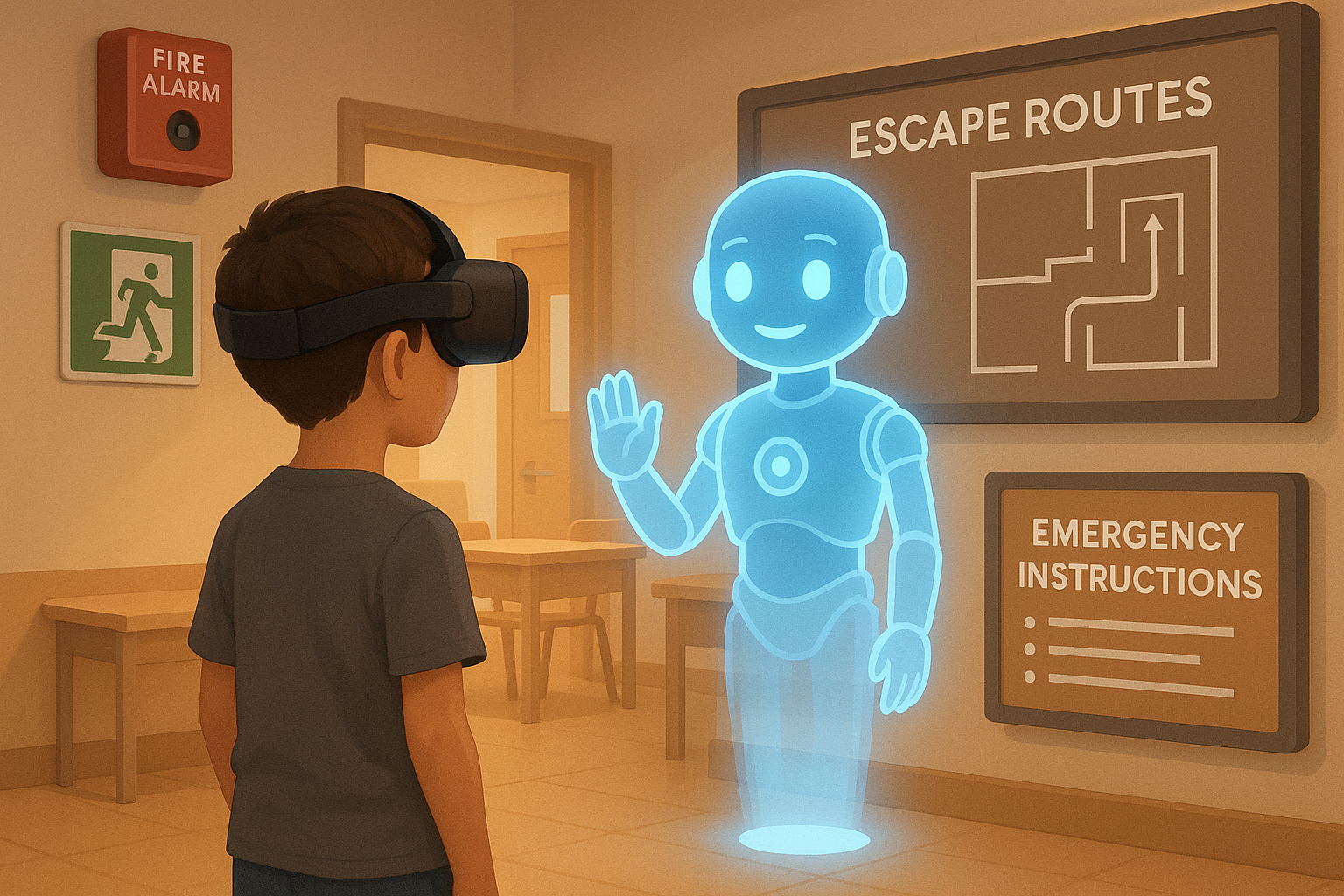
How AI Powers Child Safety Simulation Exercises
AI is transforming how children learn safety skills by creating realistic, personalized simulations. These tools help kids practice handling emergencies, both online and offline, in a safe and controlled setting. Unlike traditional methods, AI adapts to each child’s learning pace, provides instant feedback, and focuses on areas where they need improvement. For example:
- Custom Scenarios: Tailored to age and skill level, from basic fire safety for young kids to decision-making exercises for older children.
- Immediate Feedback: Explains mistakes and reinforces correct actions in real time.
- Realistic Simulations: Covers physical dangers (like fires or stranger encounters) and digital risks (like cyberbullying or predators).
AI also tracks progress, ensuring no child is left behind. Tools like Guardii go further by combining training with live monitoring, protecting kids during actual online interactions. Together, these solutions teach safety skills while offering real-time protection.
AI Standards and Cybersecurity Education for Kids with Sam Bourgeois
Ways AI Improves Child Safety Training
AI is reshaping child safety training by introducing methods that make learning more engaging and effective. By addressing the limitations of traditional approaches, it creates personalized, interactive experiences that cater to each child's unique needs and circumstances.
Custom Training for Different Ages
AI customizes safety scenarios based on a child’s developmental stage and learning pace. It evaluates factors like age, comprehension level, and past performance to deliver content that resonates with each learner’s abilities and understanding [2][7].
For younger kids, the system uses visual scenarios with simple instructions, such as identifying trusted adults or learning basic fire safety rules. Older children, on the other hand, engage in decision-based simulations that challenge them to evaluate options and understand the consequences of their actions. The AI doesn’t just adjust the complexity of the material but also adapts its feedback style - providing detailed explanations and encouraging thoughtful reflection on safety choices [2][7].
If a child struggles with a concept, AI steps in with additional practice opportunities, breaking down complex ideas into smaller, easier-to-grasp parts. These tailored scenarios ensure that training sessions are both effective and engaging, laying the groundwork for instant feedback and continuous improvement.
Instant Feedback and Adjustable Learning
One standout feature of AI in safety training is its ability to deliver immediate, personalized feedback. Unlike traditional methods that may take days or weeks to evaluate performance, AI responds in real time to every decision a child makes during simulations [7][2].
For correct responses, the system offers age-appropriate positive reinforcement, boosting confidence. When mistakes happen, it provides constructive guidance, explaining why certain actions are safer and suggesting better alternatives. This approach helps children understand the reasoning behind safety rules rather than just memorizing them.
The adaptive learning system tracks each child’s progress, identifying patterns in their responses. It pinpoints areas of strength and weakness, adjusting future scenarios accordingly. For example, if a child struggles with online safety but excels in physical emergency responses, the system focuses more on online safety while keeping engagement high with occasional physical safety challenges [7][2].
This tailored feedback ensures that no child gets left behind or disengages from content that’s too simple. By constantly adapting, the system creates a dynamic learning environment that prepares children for realistic emergency scenarios.
Creating Realistic Emergency Scenarios
AI takes safety training to the next level by generating immersive, lifelike scenarios that go beyond traditional methods. These virtual environments, complete with branching storylines and realistic characters, mirror situations children might face in their daily lives [4][7][6].
Fire drill simulations, for instance, include realistic elements like smoke effects, time constraints, and unexpected obstacles. Children can practice navigating their actual school or home layouts, learning how to adapt if primary exits are blocked or if they need to assist younger siblings or classmates.
Stranger danger scenarios are designed to teach children how to assess situations rather than instill a blanket fear of strangers. These simulations present nuanced contexts where kids learn to evaluate body language, recognize manipulation tactics, and respond assertively in settings like playgrounds, shopping malls, or on their way to school.
Online safety scenarios address modern digital threats using realistic social media interfaces and messaging platforms. Children encounter situations involving cyberbullying, exposure to inappropriate content, or predatory behavior. These simulations help them recognize warning signs, understand reporting procedures, and practice strategies for maintaining privacy online [4][7][6].
The AI also personalizes these scenarios to reflect each child’s environment. For example, urban kids might practice subway safety, while those in rural areas focus on navigating isolated spaces or agricultural hazards. School-specific simulations can even incorporate actual building layouts, staff members, and emergency protocols, making the training directly applicable to real-life situations.
Choosing the Right AI Simulation Platform
Selecting the right AI simulation platform for child safety training involves carefully weighing features, costs, and how well the platform aligns with your organization’s goals. The choice you make will directly influence how effectively children grasp safety skills and how smoothly instructors can deliver the training.
Important Features to Look For
When evaluating AI simulation platforms, scenario customization should be a top priority. Look for platforms that include a wide variety of pre-built scenarios - such as emergency response, online safety, and abuse prevention - and allow for the creation of custom content tailored to specific needs [4][1].
Another key feature is content tailored to different ages. The platform should adapt its scenarios to match a child’s developmental stage, adjusting language, visuals, and decision-making challenges accordingly. This ensures younger children aren’t overwhelmed while older kids stay engaged with material that challenges them appropriately [4][1].
Ease of use is equally important. Tools like ThingLink’s Scenario Builder make it possible for non-technical users to create simulations using simple text prompts or uploaded materials. A user-friendly interface for children, paired with clear instructor dashboards, reduces the need for extensive technical support [4].
Data privacy is critical when working with children. Platforms should comply with U.S. regulations like COPPA and FERPA and include features such as end-to-end encryption, minimal data collection, parental consent, and transparent privacy policies [1].
Another must-have is real-time feedback and analytics. A good platform provides instant responses during simulations and generates detailed reports to identify knowledge gaps, helping instructors fine-tune their training [7][4].
Scalability is also worth considering. The platform should accommodate both individual and classroom training and handle increased usage during busy periods without issues [4][1].
Lastly, integration capabilities with existing tools can simplify workflows. Platforms that work seamlessly with learning management systems, communication apps, and other classroom technologies make it easier for instructors to maintain consistency [4][3].
These features collectively ensure that training is effective, adaptable, and easy to implement. With these in mind, it’s time to compare platform types to find the best fit for your organization.
Comparing Platform Types
Different types of platforms offer unique advantages and limitations, depending on your organization’s resources, technical setup, and training goals. The table below highlights key differences:
| Platform Type | Strengths | Limitations | Best For |
|---|---|---|---|
| VR/AR Tools | Immersive scenarios with strong emotional engagement | High cost, specialized hardware, technical complexity | Advanced training for older children |
| Mobile Apps | Widely accessible, portable, easy updates | Limited scenario complexity, smaller screens | Quick safety drills, individual practice |
| Web-Based Platforms | Cross-device access, no installation, collaborative features | May lack full immersion, requires internet | Group training, remote learning |
VR/AR platforms use technologies like Unity or Kinect to create highly immersive environments where children can practice safety skills in lifelike virtual settings. However, the cost and hardware requirements often make these platforms more suitable for specialized programs with ample funding [7].
Mobile apps, on the other hand, take advantage of devices many families already own, making them great for home practice or quick safety drills. However, the smaller screen size can limit the depth of scenarios they can present [4][3].
Web-based platforms, like ThingLink, strike a balance between accessibility and functionality. They work across multiple devices without requiring special hardware and are flexible in deployment. For instance, CAST (Child Advocacy Services of Tennessee) uses ThingLink to create microlearning experiences for child protection professionals. Tyler Counsil, the Director, explains:
"ThingLink is bridging the gap – augmenting and enhancing what we do and giving us a safe space to train future professionals. When you don't have access to the real environment, you can enhance and expand with an immersive environment." [4]
To make the best decision, consider running pilot programs with small groups before committing to a platform for your entire organization. This allows you to evaluate user engagement, technical needs, and training effectiveness without a large upfront investment [1][4].
Setting Up AI-Powered Safety Simulations
Setting up AI-powered safety simulations can be a smooth process with the right preparation. By combining the proper tools and an effective approach, you can create a learning environment that helps children build essential safety skills.
Getting Ready for Training Sessions
Start by ensuring your equipment is ready to go. This might include a computer or tablet with enough processing power, a stable internet connection, and, for more immersive experiences, VR headsets or quality audio devices. Test everything beforehand to avoid disruptions during the session.
Next, focus on the software setup. This will depend on the platform you’re using. For instance, web-based tools like ThingLink are easy to access with just a browser and user registration, while other applications may require downloading and installation. Make sure the software complies with U.S. privacy standards and works seamlessly with your devices [4][8].
When configuring training scenarios, align them with your objectives and the child’s developmental stage. Start with simpler scenarios to build confidence, gradually increasing complexity as they gain experience. This step-by-step approach keeps the learning process engaging without overwhelming young learners [4].
Finally, prepare the training environment. Choose a quiet, distraction-free space where children can focus. For VR or other movement-based activities, clear the area of any obstacles to ensure safety during the session [8].
Running Effective Training Sessions
Introducing children to these simulations requires clear, age-appropriate communication. Explain the purpose of the training in simple terms, emphasizing that it’s a safe and supportive space to learn. When children understand how these exercises help keep them safe, they’re more likely to engage positively [4][8].
If possible, demonstrate the simulation yourself first. This helps children know what to expect and encourages them to ask questions. Address any concerns they might have about the technology or scenarios.
Setting clear learning goals is another key step. Share the objectives of the session and, if available, use progress trackers to help children see how they’re advancing [4][8].
Creating a supportive atmosphere is essential. Offer positive reinforcement throughout the session and encourage curiosity. Children learn best when they feel free to explore and make mistakes without fear of judgment [4].
Research shows that immersive AI environments, especially those using 3D VR, are more engaging and emotionally impactful than traditional safety education methods. Both educators and students report higher satisfaction and better retention of safety concepts when using these tools [8].
Once the session begins, effective supervision is critical to ensure both learning and safety.
Watching and Guiding Training
Tailor your supervision strategies to the child’s age and their comfort with technology. Younger children often need close guidance through each scenario, so stay nearby to help them understand what’s happening [4][8].
Older children, on the other hand, may benefit from more independence. Be available for questions or support, but give them space to explore. This approach builds their confidence and decision-making skills. As they become more comfortable, gradually allow them more autonomy.
Monitoring progress involves paying attention to both the child’s interactions with the simulation and their emotional responses. Look for signs of hesitation, confusion, or distress. Take note of areas where they excel or struggle, as this information will help shape future sessions [4][8].
Encourage critical thinking by asking open-ended questions. For example, instead of asking, "Should you talk to strangers online?" try, "What do you think about this message?" This method helps children think through safety concepts on their own.
When offering guidance, avoid unnecessary interruptions. Let scenarios play out naturally and allow children the chance to work through challenges independently. Step in only when they seem stuck or distressed. After each scenario, hold a quick debriefing session to discuss what they learned and address any concerns. Highlight their successes before discussing areas for improvement to keep their confidence high.
The ultimate goal is to create a space where children feel empowered to practice safety skills without fear of failure. This builds their confidence and prepares them to make sound decisions in real-life situations. These supervisory techniques help ensure that the training is both effective and enjoyable.
sbb-itb-47c24b3
Using AI Feedback to Improve Training
AI-powered safety simulations offer more than just pass-or-fail results. They provide detailed insights that help refine training methods and equip children with practical, lasting safety skills.
Understanding Performance Data
AI systems monitor multiple aspects of a child's performance during safety simulations, such as how quickly and accurately they make decisions, their response patterns, and how well they retain information. These metrics enable trainers to pinpoint which safety protocols need reinforcement and which are well understood [7].
For example, response patterns can reveal how children approach scenarios. If a child hesitates to report a suspicious online message or tries to handle it alone, this may indicate a need for confidence-building exercises. By analyzing such behaviors, trainers can address specific gaps in understanding.
Advanced AI platforms also generate detailed reports, including visual representations of learning progress. These reports highlight mastered skills and flag persistent challenges. Metrics like error frequency and decision-making time across sessions help trainers provide targeted support [7].
In one instance, a simulation platform identified hesitation during emergency evacuation drills among a group of children. Further analysis showed confusion about exit routes. To address this, the system introduced additional practice focusing on route identification, which led to faster and more confident responses in subsequent drills [4][7].
Understanding why a child makes a wrong decision - whether due to confusion, lack of confidence, or insufficient practice - lays the groundwork for refining training methods. This insight enables dynamic adjustments to scenarios for better learning outcomes.
Changing Scenarios Based on Results
AI systems use performance data to adapt training scenarios, focusing on areas where children need the most improvement. For instance, if a child struggles to recognize online predatory behavior, the system can increase the frequency of related scenarios and adjust their complexity to match the child’s skill level [7][10].
This adaptation can happen in real time. If a child appears overwhelmed, the AI can simplify the scenario or provide immediate support to maintain engagement and prevent frustration.
Balanced scenario planning is another key benefit. For example, data might show that a child excels in face-to-face safety situations but struggles with digital safety concepts. Trainers can use this insight to create a mix of scenarios that address both strengths and weaknesses.
Expert oversight is essential in interpreting AI-generated data. Child psychologists and safety educators review trends to ensure that scenario adjustments align with developmental needs and best practices [4][7]. Adaptive systems are highly effective in bridging the gap between theory and real-world application.
Building Skills Through Practice
AI-guided practice sessions are designed to build automatic safety responses. By identifying which scenarios require extra attention, the system schedules targeted practice to help children retain what they’ve learned [7][3].
The training process progresses gradually. It starts with simpler scenarios and introduces more complex challenges as children improve, striking a balance that keeps them engaged without causing frustration or boredom.
This feedback loop creates a dynamic learning environment. As children overcome challenges they previously struggled with, the AI recognizes their progress and introduces new, more advanced scenarios. This keeps the training engaging and fosters continuous improvement.
Studies show that this adaptive approach can improve learning retention rates by up to 60% compared to traditional training methods [7].
Regular review sessions, guided by AI data, further reinforce learning. These sessions identify which skills have been mastered and which need more practice, allowing for a personalized training schedule that maximizes each child’s potential.
Testing Training Results in Real Life
While virtual simulations are a great starting point, the real measure of success lies in how well children apply their training in real-life situations. Bridging the gap between virtual learning and actual emergencies requires thoughtful planning and continuous evaluation to ensure that safety skills become second nature.
Running Practice Drills
Practice drills in familiar settings like schools, homes, or community centers provide a critical step between simulation and real-world application. These drills should replicate the complexities of simulations by introducing unexpected challenges. For example, stranger danger exercises can take place in controlled environments, such as school playgrounds or community events. Here, adults can role-play scenarios, allowing children to practice seeking help from trusted individuals and using effective communication strategies.
For digital safety, supervised online sessions can simulate phishing attempts or inappropriate messages. These controlled exercises let educators assess whether children can identify digital threats and respond appropriately, reinforcing lessons from virtual simulations.
By offering realistic yet controlled environments, these drills provide children with hands-on practice while allowing educators to monitor their progress in a structured way.
Monitoring Progress Over Time
Practical drills are only part of the equation. To truly refine safety skills, systematic tracking of progress is essential. AI-powered dashboards can transform drill data into actionable insights, highlighting each child’s performance in areas like response times and decision-making accuracy.
For instance, tracking how quickly a child recognizes a threat can reveal whether they’re becoming more adept at identifying danger. Similarly, analyzing the accuracy of their decisions ensures they’re making the right safety choices under pressure.
A notable example comes from Oslo Metropolitan University, where researchers developed a multimodal AI-driven child avatar in 2021. Using data from 741 mock and real interviews, this avatar was used to train child protection workers and students in VR settings. Participants reported that the realistic simulations enhanced engagement and improved their skills [8].
Visual tools like color-coded dashboards make it easier for parents and educators to spot strengths and areas needing improvement. Regularly reviewing these reports ensures training stays focused and effective, allowing educators to adjust strategies as needed.
Combining Simulations with Other Safety Education
To make safety training truly effective, it’s important to combine AI-driven simulations with more traditional methods of safety education. This layered approach caters to different learning styles and reinforces key lessons through multiple channels.
For instance, classroom discussions following simulations give children a chance to reflect on what they’ve learned and share their experiences. These conversations can also help clarify any misunderstandings and deepen their understanding of safety concepts.
An example of this approach is CAST’s use of ThingLink's AI Scenario Builder to create immersive training environments. Trainees practiced handling challenging scenarios, and feedback showed that the immersive experience helped bridge the gap between theoretical learning and real-life application, boosting emotional readiness and knowledge retention [4].
Parental involvement plays a big role, too. When families practice safety scenarios together, it reinforces the skills children learn during simulations. Partnerships with local organizations like fire departments or police stations can also provide valuable opportunities for children to demonstrate their skills and receive expert guidance in a supportive setting.
Guardii: Combining AI Monitoring with Safety Simulations

Simulation exercises are great for teaching online safety skills, but real-world threats require constant vigilance. That’s where Guardii steps in, bridging the gap between practicing safe behaviors in controlled environments and receiving real-time protection during actual online interactions. By combining training with live monitoring, Guardii creates a safety system that works 24/7, offering a well-rounded approach to digital safety.
Building a Complete Safety System
Guardii takes child online safety to the next level by adding continuous AI monitoring of direct messages on social media. This ensures a smooth connection between the safety skills children learn in simulations and the protection they receive when navigating real online conversations.
Currently, Guardii protects 2,657 children across 14 countries by using advanced AI to filter out genuine threats while leaving normal conversations untouched [9]. When suspicious content is detected, Guardii acts immediately - it removes the harmful material, preserves evidence, and provides parents with detailed incident reports and actionable advice. These real-time alerts mirror the instant feedback from simulations, reinforcing the safe habits kids practice during training.
Guardii also prioritizes trust and privacy. By focusing on behavioral patterns and risk signals, it ensures parents can track key metrics like "Threats Blocked" and "Safety Score" via a secure dashboard, all without intruding on their child's private conversations [9].
Benefits of Combined Safety Solutions
Guardii’s approach doesn’t just prepare kids for online risks - it actively protects them while they’re online. This dual focus addresses a significant challenge in child safety: ensuring that the skills learned in training translate into real-world situations. The urgency is clear - online grooming cases have surged by over 400% since 2020, with 80% of these incidents starting on social media and then shifting to private messages [9]. These alarming statistics highlight the need for both proactive education and reactive protection.
While simulation training helps children recognize red flags, AI monitoring acts as a safety net, catching threats they might miss and offering immediate intervention. What’s more, Guardii’s system learns continuously. Threat patterns identified in real-world scenarios feed back into the simulations, improving their accuracy and ensuring training evolves alongside emerging risks.
"The research clearly shows that preventative measures are critical. By the time law enforcement gets involved, the damage has often already been done."
- Guardii's 2024 Child Safety Report [9]
For parents juggling the online safety of multiple children, Guardii offers scalable solutions. Family plans allow monitoring across different platforms and multiple children, while simulation training can be tailored to specific ages and risk levels. This ensures that as kids grow and their online habits change, their protection evolves with them.
Parents also appreciate the peace of mind that comes with a system like Guardii. As one parent shared:
"As a parent of two pre-teens, I was constantly worried about their online interactions. Since using Guardii, I can finally sleep easy knowing their conversations are protected 24/7. The peace of mind is invaluable."
- Sarah K., Guardii Parent [9]
Conclusion: Helping Parents with AI-Driven Safety Solutions
AI-powered simulations offer an engaging way to teach kids essential safety skills by creating realistic scenarios where they can practice emergency responses. What sets these tools apart is their ability to provide instant feedback and adjust to a child's age and skill level, making safety education more effective and personalized. This approach is paving the way for solutions like Guardii, which take training a step further by integrating it with real-time protection.
When evaluating tools, parents should prioritize those that offer age-appropriate content, strong privacy safeguards, and reliable feedback systems. The success of initiatives like the AI for Safer Children Global Hub - where over 350 officers from 89 countries received training - demonstrates the potential scale and impact of such solutions [5].
That said, simulation training by itself isn’t enough. While simulations help kids build decision-making skills, tools like Guardii complement this by stepping in during real-time risks. Together, they create a balanced approach: simulations prepare children for potential threats, and AI monitoring provides immediate intervention when needed.
For families with multiple children, this combined strategy offers a scalable solution that evolves alongside their kids' online behaviors. As children grow and their digital habits change, these tools can adapt to provide both education and protection tailored to their needs.
To keep kids safe in today’s digital world, parents need a mix of proactive training and vigilant monitoring. By combining simulation-based learning with real-time AI tools, families can ensure their children are not only ready to handle online threats but are also actively shielded from them. Solutions like Guardii empower parents to create a safer online environment, offering peace of mind in an ever-connected world.
FAQs
How does AI help protect children’s safety and privacy during training simulations?
AI is transforming child safety training by offering lifelike, scenario-based simulations that help responders practice managing delicate situations with precision. These simulations leverage AI to create diverse scenarios, anticipate possible outcomes, and adjust in real-time, delivering a highly interactive and engaging training experience.
Privacy remains a top priority in these systems. AI is programmed to anonymize and secure any data used, ensuring that personal or sensitive information stays protected while maintaining the authenticity required for impactful training. By merging cutting-edge technology with strong privacy measures, AI-driven simulations offer a controlled and secure environment to refine child safety protocols effectively.
How does AI improve child safety training compared to traditional methods?
AI-powered simulations are changing how child safety training is approached, offering a more interactive and realistic experience compared to older methods. By leveraging advanced algorithms, these simulations create tailored, scenario-driven exercises that adjust to various situations, making the learning process both engaging and effective.
One big advantage is the ability to deliver real-time feedback. This helps participants quickly pinpoint areas where they can improve. On top of that, these simulations can mimic complex, real-life scenarios that would otherwise be tough to recreate, providing a more thorough preparation for handling emergencies. This modern approach not only improves learning outcomes but also equips individuals to make smarter decisions when it matters most.
How can parents use AI tools like Guardii to keep their children safe online?
Parents looking to keep their children safe online can turn to tools like Guardii, which offers advanced monitoring and detection features. Guardii operates quietly in the background, scanning direct messages on social media to spot and block harmful content or predatory behavior - all while respecting privacy.
By integrating Guardii into everyday life, parents can offer their kids round-the-clock protection during online interactions. This not only creates a safer digital space but also encourages trust and open communication within the family.